My blog is returning to stories both personal and of the mind.
MY NEED TO FLY, PART I
Ever since I can remember I have been in love with airplanes and flight. Reading about their history and current developments along with learning about famous pilots in the past kept my interest alive.
In my youth I began on the road of becoming a voracious reader with comic books. The genres I loved the most were superheroes and horror. If you read my short stories you would see that my love for horror continues.
One thing I remember about comic books back then was the back page. Most of the time there were ads. One of the common ads was of some wimpy guy having sand kicked into his face by a muscular Heman. With the help of this ad, you could become a muscular Heman, and I guess kick sand into a guy not as well-developed as you.
Now I’m talking about the early 1960s, less than 20 years after the conclusion of World War II. The country still had a massive amount of military equipment. You could find ads at the back of comic book for some of this equipment for sale. Of course, readers of comic books had plenty of money to make purchases of these items. For sale were army jeeps for $99. A lot of money back then. I am shocked at the price of cars these days. I bought my first Volkswagen Beetle in late 1969 for slightly over $2000. The only reason it was more than $2000 was that I wanted a radio, AM. There were also ads for crated airplanes from World War II with no indication whether they were bombers or fighters.
This was way before the War Bird movement for restoring and flying such aircraft came into existence. Now these same planes are for sale for millions of dollars. I recall reading a story, not long ago, of a Hellcat, a navy carrier aircraft, being flown cross-country to a school where these aircraft were used for instruction. The plane ran out of fuel and the pilot made a perfect emergency landing in a farm field. When it was time for the farmer to plow, the plane was offered by the government for free to whomever would tow it away. Obtained for free was an aircraft which would cost millions today/
It was no surprise that when I was in high school these ads caught my attention. I, along with some friends of mine who were also crazy about airplanes decided to buy one. Where money would come from was caught up in our dreams.
Now, we planned to buy an airplane. Did we have any tools to accomplish the construction of said plane? No! Did we have any of the skills required to accomplish this task? No! Did we have a place to do the work? No! Of course, nothing came of this plan, but for a very short time, we dreamed
My interest in airplanes never wavered and was carried into college where I enrolled in Air Force ROTC. I took a gamble that I would qualify for piolet training, and I won. When you qualify for piolet training, the government pays for 36.5 hours of flight instruction during your senior year.
I was going to learn to fly – for free.
I still look back on those days of flight training fondly. Of the day when I was shooting touch and go landings. My instructor had me stop on the runway, got out, and I was on my own rejoining the traffic pattern.
I flew twice a week and remember one morning when the air was like silk, and the plane and I became one. Now, this flying was taking place in Oklahoma where it can be rather windy. One afternoon I was flying solo in the little Cessna 150 being used for flying lessons and the wind was blowing hard. I came in for a landing on a runway long enough to land a Boeing 707. I flew the length of the runway but couldn’t stay over the runway long enough to land and had to go around.
Then there was the time I was lost flying solo. I have no sense of direction and did not believe my instrument used for direction. But that’s another story.
Even with a few speedbumps I enjoyed every minute I spent learning to fly.
December 13, 2024 at 8:58 pm
This is my first published story. Published by Enigma in 2003, a Philadelphia small publisher no longer is existence.
REUNION
The June morning was brilliant and clear with just enough of a breeze to keep you cool despite the predicted eighty-degree day. At the age of eighty-two, for Christopher Johnson, getting up in the morning was not an easy chore and had lately not seemed worth the effort. He turned his head and looked at the pillow beside him. “I miss you so much honey,” he said quietly. His wife Peggy had died less than a year ago. One night they went to bed as usual. The last words he had said to her were the words he always said to her before falling asleep, “I love you.” When Chris awoke, Peggy was dead of a heart attack. A few days later he was looking into her grave knowing a large part of his life was now buried in the cold earth. After almost sixty years of marriage, the pain of her loss was intense, almost as intense as the love they had shared all those years.
With Peggy still on his mind, he sat up and began to stretch his arthritic limbs knowing the pain that would follow. Next, he stood up and took a few steps; those first steps, they were the worst of the day. He winced with every movement, but soon his joints and muscles settled down to the constant pain that accompanied him these days.
He had gotten up earlier than usual, for today, unlike most of his days, he had an appointment, something to do. He opened his closet door and, in the back, he found what he was looking for: his U.S. Army ranger dress uniform, the one he had worn on his return home after being wounded during World War II. With persistent pain, he maneuvered his body into the uniform that, after sixty years still fit his slender frame. He looked in the mirror, and the toll of those sixty years stared back at him. The hair on his head and his mustache had gone gray years ago. His eyes, once admired by his fellow soldiers for their ability to spot enemy aircraft or fortifications before anyone else, now watered behind heavy bifocals. He inspected his image, looking over the uniform for signs of moth damage. The area of his uniform he examined first was his chest; there hung the Purple Heart and the Congressional Medal of Honor. He was proud to have served his country, proud of his awards but knew, that in combat, a split second could mean the difference between a dead soldier and a hero. Satisfied that his uniform had survived another year, he returned it to the closet and dressed in his usual summer shirt and khakis.
While Chris hung up his uniform, his mind still held the Medal of Honor and the events that led to its award.
The day was D Day, early in the morning of June 6th. Chris was among a group of Army Rangers that would be the first to hit the beach. Their objective was to climb and secure the cliffs overlooking the landing sites. These cliffs held guns that could hazard the ships and soldiers, and the hazard needed to be removed. German soldiers were stationed on the cliffs, ready to rain death on unprotected soldiers landing on the beach below. Chris and his three buddies Frank Grimes, Larry Schwartz and Duck Dupont were together in the landing craft, along with twenty other rangers heading toward the beach.
Chris had begun basic training knowing no one. Soon he gravitated to three other guys who seemed to be as lost and alone as he was. The four of them gradually became friends and survived the ordeal together. Of the three, he was closest to Duck Dupont. Duck’s real name was Willard; he gained his nickname Duck during a basic training class. The class was walking past the artillery area when a practice round went off. Most of the class flinched, but Duck was on the ground with his head covered by his hands. From then on he was known as Duck.
His thoughts returned to June 6th.
It was still dark and they landed unopposed. The men quickly and quietly disembarked and headed for the base of the two hundred foot cliff – it would be quite a climb. When everyone was in position, they fired ropes up the side of the cliff. This brought the response they expected, Germans began firing down the cliff and rangers began to collapse on the beach. Chris and his friends were to stay together and climb along with most of the rangers while the rest provided cover fire. Soon the German fire lessened then ceased as the rangers continued their climb.
The four friends were the first to reach the top of the cliff. What they saw sent a shiver through them all. Before them, set back about fifty yards from the edge of the cliff, stood a series of three bunkers. The first light of dawn streamed through the trees beyond the enemy, and all seemed quiet and peaceful except for the machine guns projecting from behind sandbags. They knew they had to act fast, for if they didn’t, the rangers coming up the cliff would be cut down as soon as they reached the top. They split up into two groups; Chris and Duck went to the left – Frank and Larry to the right. The two flanking bunkers had to be eliminated before the middle position could be attacked. Each group approached the nearest bunker and tossed a grenade inside. The simultaneous explosions sent German soldiers into action. The rangers had missed one. Along with fire from the third remaining bunker, a fourth bunker opened up along with mortar fire from behind the bunker. The fourth bunker surprised the rangers and had a clear shot at them. Duck was literally cut in half by machine gun fire. Larry was attacking the third of the bunkers they had seen, having just pulled the pin from a grenade when he was shot. They never did find Frank. Chris entered the first bunker they had taken out, pushed aside the mangled German bodies and manned the machine gun. He quickly took out the bunker they had overlooked before, creeping up to the last remaining bunker; he destroyed it with grenades. The actions of the four men had saved the lives of the rangers now reaching the summit of the cliff and helped secure the landing site for the invasion.
In the early morning silence, after the heat of battle, Chris collapsed on the ground part from fatigue, part from pain, but mostly from grief – his friends were gone. Chris had shrapnel wounds in his left arm and hip. At some point his helmet had taken a hit and deflected the bullet but the impact gave him a nasty scalp wound. Blood now streamed down the side of his face and soaked his collar.
These are the memories that flooded into Chris’s mind as he put away his uniform and prepared to spend a weekend at the Mid Atlantic Air Museum as a guest of honor, something he had done for the last five years. This would be his first year going without Peggy at his side. He knew it would not be the same without her, but he still looked forward to the event.
The museum had organized a weekend devoted to the history of World War II for the last ten years. It was a living history lesson with vintage aircraft flown in from all over the country, and encampments set up with hundreds of reenactors dressed in the World War II uniforms of the United States, England, France and Germany. The museum also invited veterans from the war who would give first hand accounts of combat. But none of them told what the war was really like for their memories were selective, cleansed by time, and they all carried within them that area of memory they would never enter again.
World War II weekend started Friday morning and, although he wasn’t scheduled to give his presentation until Saturday, Chris always went Friday to wander the hanger and apron crammed with vintage World War II fighters, bombers, trainers and transports. He could remember when the skies were filled with their kind. Now there remained only a few of each. On those warm Friday afternoons, he enjoyed walking through the encampments. At one point he saw three men in ranger combat uniforms. He smiled to himself, glad to see his branch of the army represented. Chris loved strolling through the tents. In his mind, there was nothing like the smell of a real canvas tent; the open flaps were your windows and the grass was your floor. He had seen the tents his grandchildren used when they camped, it was like camping in a nylon bag, no smell, no character. In one of those old canvass tents, he could stand, close his eyes, and the memories of his days in the army would flood into his brain.
Another reason he enjoyed the Fridays was the veterans whose attendance was heavy. The old men and women enjoyed the smaller crowds and slower pace that Fridays afforded. He enjoyed conversations with his contemporaries, reliving the past and recalling the days they were once young and involved in the great adventure they shared.
Saturday morning arrived, the sky again clear and blue. He went through his morning routine, slowly struggled into his uniform and waited for his nine o’clock ride to the museum. Chris looked forward to the day. Although he had never made a big deal about his award, one day bathed in the admiration of people who appreciated the sacrifices made during World War II did not hurt him, not at all.
With his first lecture scheduled for 10:30, he was anxious to get to the museum. He found the tent for his lecture. There were about fifty folding chairs set up. He took a moment and stood there alone, letting his mind recall memories that he usually avoided, memories that he would touch slightly, just slightly today.
As he waited at the speaker’s platform, the tent began to fill up. At the back of the tent, he spied the three young men in ranger uniforms he had seen the day before, standing together apart from the crowd. Maybe today they would learn something about the uniforms they wore.
The chairs were full and people were standing in the back as Chris went into his presentation. He shared with them the events of that early morning on the French coast, sanitized, but with enough action to keep the crowds attention. After thirty minutes he was done and ready for questions. Half way through the questions one of the men dressed as a ranger raised his hand and said, “Sir, I just want you to know we appreciate what you did for your country.”
That brought a smile to Chris’ face, “I appreciate that son,” he answered.
The presentation over, the tent was cleared, and it was time for a little lunch and a chance to watch the vintage aircraft flying. This was the part he most enjoyed. The drone of the B-17 accompanied the whine of the Merlin powered P-51s. He knew the planes were the big draw, not old men wearing old uniforms, but he was happy to be part of the show.
First to fly were the trainers, SNJs and T-28s. Then the observation aircraft would fly, the L-19s, followed by the transports, the C-47s and a C-54. Before the fighters and bombers took off, the reenactors took the field in front of the crowd. To the left were the men in German uniforms, to the right the U.S. Army.
The uniformed men fired blanks and mock mortars at each other. There were also smoke grenades thrown by both sides. All this action took place in a grassy area between the runway and aircraft taxiway. As usual, the fire department stood ready for the grass fires the smoke grenades always started, and this year was no exception. The grass fires were more of a nuisance than a danger, and they were always rapidly dealt with. In fact, the dense plumes were greater than any of the regular attendees of the show could remember, and the fire company quickly prepared to hose down the grass. Chris stood there with the rest of the crowd as the shroud of smoke drifted over them.
Suddenly, he felt a tap on his shoulder. It was one of the rangers, “Sir, we need your help.”
“Sure son, what can I do for you?” came Chris’ reply.
“Could you join us sir?” the ranger questioned. The ranger started walking towards the smoke set off by the mock battle, flanked by the two other rangers Chris had noticed before, and bewildered, Chris followed.
Soon smoke enveloped the four men. The crowd, watching the firemen putting out the grass fire saw the three reenactors on the field but could not imagine why an old man in uniform was traipsing in after them. They saw the four enter the clouds of smoke and lost sight of them.
Chris walked, not knowing where the three young men were taking him. His arthritis bothered him as he entered the smoke, but a few steps into the haze his pain was reduced, and then gone. He noticed something else; he no longer wore his dress uniform but wore the ranger combat uniform, same as the reenactors. All at once he was puzzled and amazed and had no idea what their destination could be.
The three reenators slowed down and Chris easily caught up with them. “How in the hell are you, Chris?” asked Duck. Frank and Larry were slapping his back and pounding his shoulders, his young shoulders.
“We’re on a mission and need your help,” said Frank. “We need the squad together,” he continued.
“I’m your man,” said Chris taking off his helmet and running his hand through his thick dark hair. His mind still could not wrap itself around what was happening.
Some of the crowd there to watch the flying saw four figures begin to emerge from the smoke, the figures of four young men. The men entered another cloud of smoke before them and were gone.
Chris and his three buddies came out of the haze. They were on a dirt road surrounded by a forest. They were all holding rifles, but Chris could sense no danger. They were on patrol and Chris felt better than he had ever felt in his life. He was with his best friends, men he had missed all these years and men he loved. The sky was so blue it almost hurt his eyes. The trees and grass were the greenest green he had ever seen. He set out with his three friends, easily matching their stride.
Suddenly, Chris’ eyes filled with tears. He did not know how, did not understand what was happening, but somehow, he knew his young and pretty Peggy was waiting.
November 23, 2023 at 8:00 pm
Since I was a boy I’ve always had a love for airplanes. While a senior in college, I learned to fly – thanks to the Air Force, and reported to pilot training five days after graduation in 1969. I’ve soloed in two types of aircraft, the Cessna 150 and the Cessna 172 which the Air Force calls the T-41. I then began flying the T-37, a small twin-engine jet. I never conquered that aircraft, the T-37 conquered me and I washed-out on Labor Day 1969.
Keeping alive that love for aircraft, 15 years ago I became a member of the Mid Atlantic Air Museum (MAAM), an organization dedicated to preserving the history of aircraft produced in the Mid-Atlantic region and aircraft of World War II. One of MAAM’s prized possessions is the B-25J Briefing Time. Their inventory also includes a navy Avenger and a host of trainers, a PT-23, PT-26 and SNJ-4B Texan. Located in Reading, Pennsylvania, I highly recommend visiting or joining the museum if you are a history or aircraft buff.
Every year the MAAM holds, on the first weekend of June, World War II weekend. This year the event fell on June 6, 7 and 8th, and being there on June 6th held special meaning for it was the 70th anniversary of D Day. I try to volunteer all three days of the show manning one of the entry gates, taking admissions and thanking people for attending.
The air show draws a host of historic aircraft, trainers, fighters, bombers and cargo planes, all of them having played an important role in winning the war. In addition to the aircraft are hundreds of reenactors representing America’s army and navy as well as the soldiers of England, Germany, Japan and Russia. These troops bring along over 100 military and civilian vehicles representing the era.
In attendance are veterans, some famous and some that just did their job and want to share their experiences. I enjoy being around these men and women who risked so much in a time when the enemy was clearly defined and the reasons for the conflict beyond doubt.
In addition to the veterans drawn to the show as speakers, a number of them also are among the spectators. Testifying to this is the size of the handicapped parking area to make it as easy as possible for the elderly to attend and the staff who offer all the respect and aid they can for these cherished individuals. I never miss the opportunity to shake the hand of these elderly heroes and thank them for their service.
This past weekend, on the morning of June 6th, I was helping a speaker to where he wanted to go and noticed his baseball cap which displayed the slogan, B-26 bomber pilot. I asked him what he was doing 70 years ago on this day and he said he was dropping bombs on Cherbourg, France in support of the landing.
At the entry gate another gentleman made his way toward me, short and hobbling along using a cane. He was 90 and was a soldier there on D Day. I also had the opportunity to shake the hand of a veteran of The Battle of the Bulge. All these encounters are very special to me.
Over the years I have met some impressive individuals whose lives were changed forever by a time requiring unbelievable dedication and personal sacrifice. I cherish the opportunity to talk to these individuals who participated in a time which cannot be truly appreciated unless you were there. As the years go by, fewer and fewer veterans remain to tell their stories, to remind us of the price paid so that we are able to enjoy the life we live.
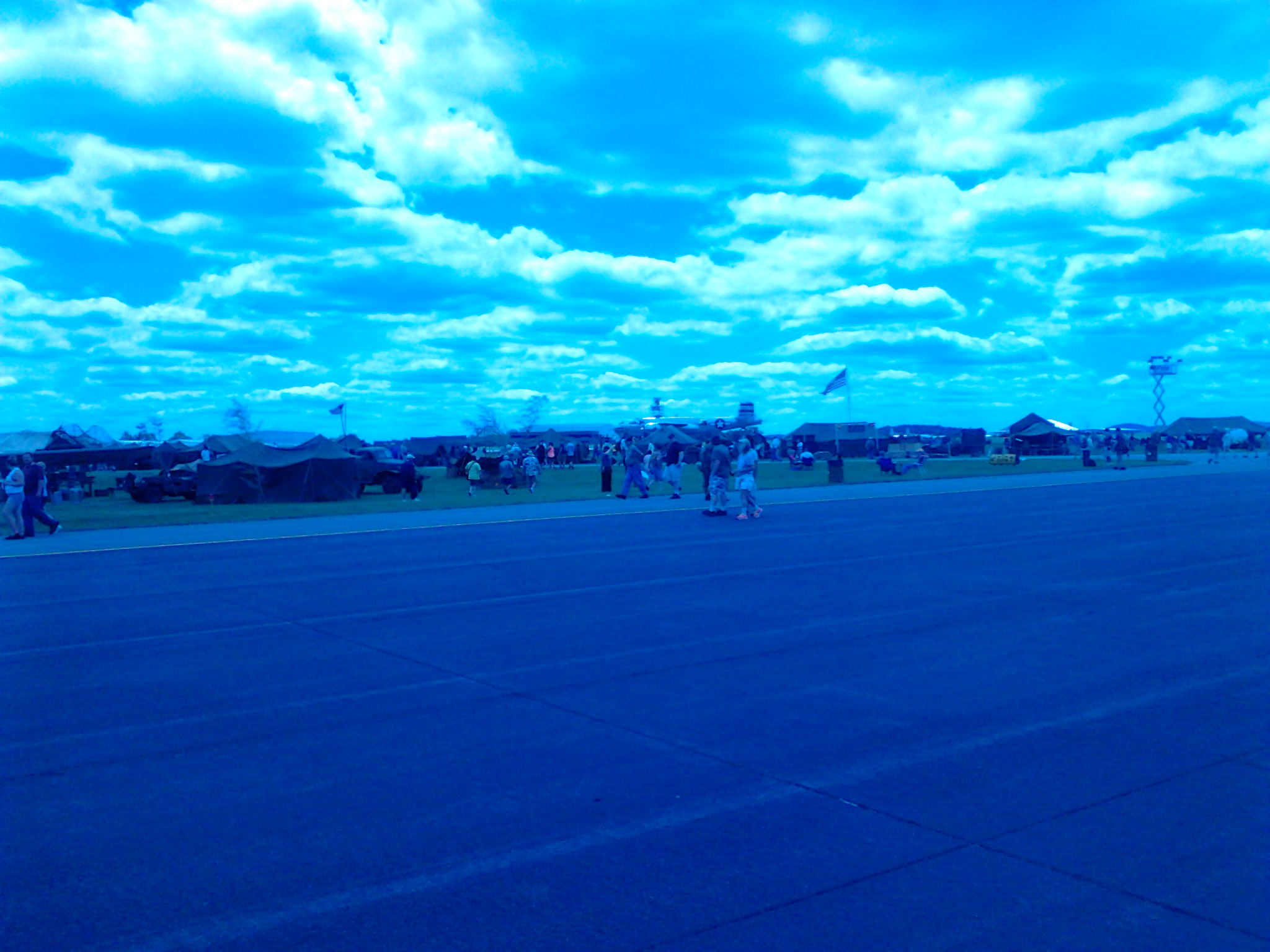
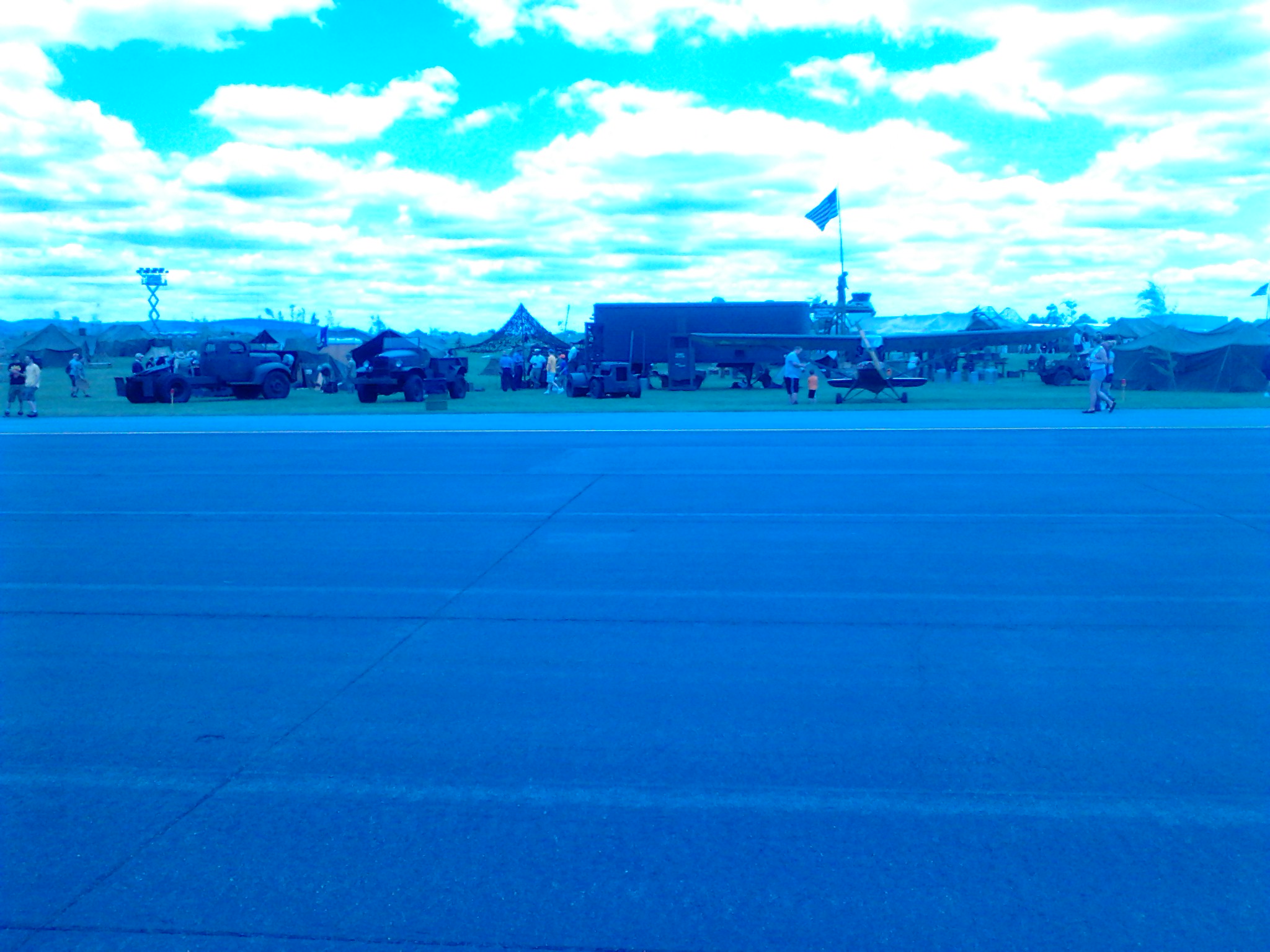
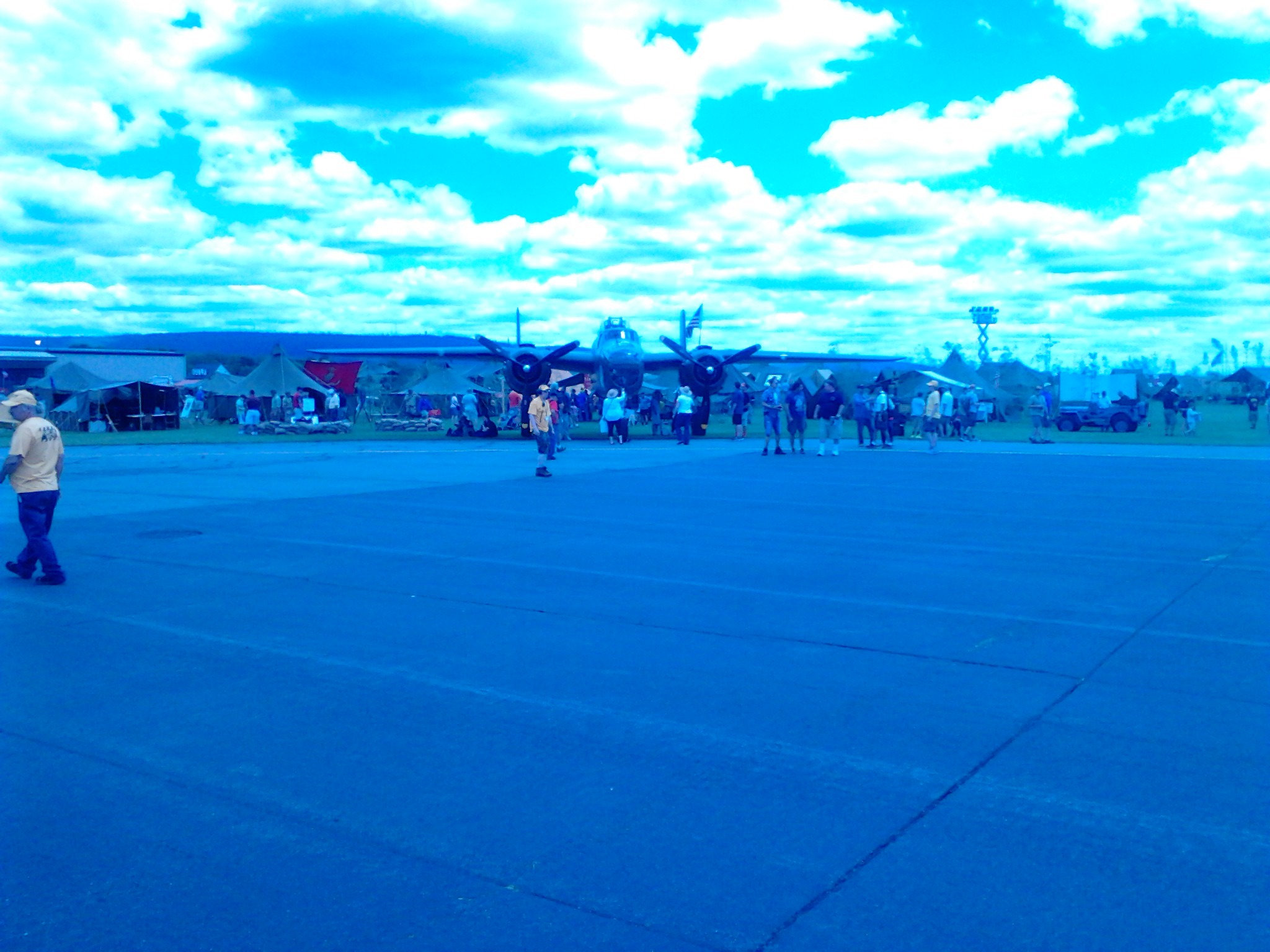
Here are some photos from the show.
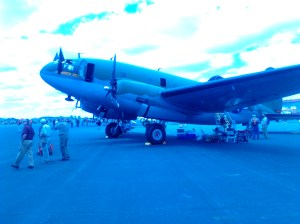
C-46 COMMANDO
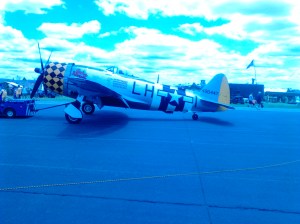
P-47D THUNDERBOLT
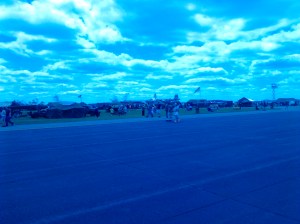
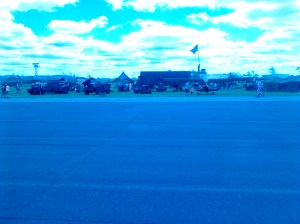
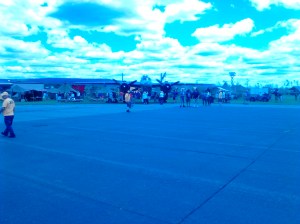
ENCAMPMENTS
June 11, 2014 at 11:46 pm


 Walttriznastories's Blog